
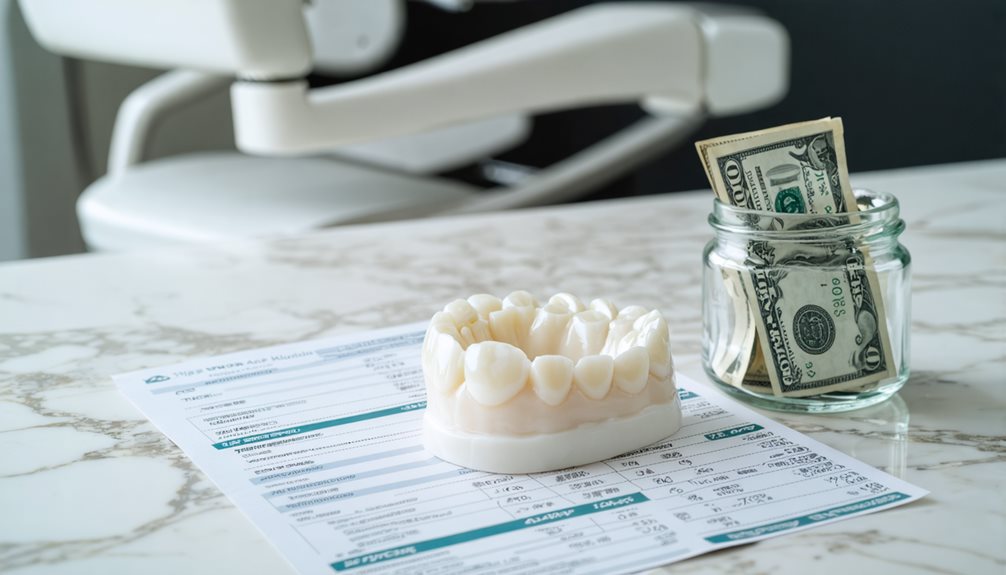
You’re considering dental veneers, but the cost is a vital factor. With prices ranging from $250 to $2,500 per tooth, understanding what you’re paying for is essential. Factors like material choice and location greatly influence these numbers. While porcelain might offer long-term value, composite options could be easier on your wallet. Ever wondered how dental insurance might affect your decision or if payment plans are an option? Exploring these aspects could lead you to a more informed decision. So, how exactly do you navigate this financial landscape without breaking the bank?
Understanding Dental Veneer Costs
When considering dental veneers, understanding the costs involved is essential for making informed decisions. You need to know the different dental veneer types available, as each comes with distinct cost implications. Porcelain veneers are popular due to their durability and natural appearance, but they tend to be more expensive. Composite veneers, on the other hand, are generally more affordable but may not last as long or offer the same aesthetic qualities as porcelain. Understanding these differences can help you make a choice that aligns with your financial and aesthetic goals.
It’s also important to examine your insurance coverage. Most dental insurance plans don’t cover cosmetic procedures like veneers, but some policies might offer partial coverage if the veneers are deemed necessary for dental health reasons. Contact your insurance provider to clarify what’s covered and what isn’t. This will help you prepare financially and avoid unexpected expenses. Additionally, consider consulting with multiple dental professionals to obtain various quotes and payment plans. By gathering this information, you maintain control over your dental health journey, ensuring that your choices are both financially and clinically sound.
Factors Influencing Price
Several variables directly impact the price of dental veneers, and understanding these can empower you as a patient. First, consider the material quality. Veneers can be crafted from porcelain or composite resin, each with distinct cost implications. Porcelain offers superior aesthetics and longevity, often commanding a higher price. In contrast, composite resin may be more cost-effective but requires more frequent replacements, affecting long-term expenses. Opting for high-quality materials guarantees durability and a natural look, aligning with your aesthetic goals.
Next, the dentist’s experience substantially influences the price. An experienced dentist with advanced training and a strong track record in cosmetic dentistry might charge more due to their refined skills and ability to deliver exceptional results. When you choose a dentist, you’re investing in their expertise, which translates to the precision and artistry of your veneers. Prioritizing a dentist with considerable experience can lead to a more satisfactory outcome, justifying the additional cost.
Finally, the complexity of your case can alter the price. If your dental needs involve significant adjustments or additional procedures, expect the cost to increase. Understanding these factors allows you to make informed decisions and manage your budget effectively.
Cost Comparison by Location
Understanding the various factors that influence dental veneer costs provides a foundation for examining how location affects pricing. In urban vs rural settings, costs can differ substantially due to varying overhead expenses, practitioner availability, and demand. Urban areas typically have higher costs due to increased overhead and more competitive markets. Conversely, rural areas may offer lower prices but might have limited practitioner options.
When evaluating insurance coverage, it’s essential to recognize that many plans don’t cover veneers, as they’re often considered cosmetic. However, some plans might offer partial coverage if veneers are deemed medically necessary. Always review your insurance details to understand your out-of-pocket responsibilities.
Consider these factors when choosing a location for your dental veneers:
- Local Market Conditions: Urban practitioners may charge more due to higher demand and operational costs.
- Insurance Networks: Check if your insurance plan includes providers in your preferred area.
- Travel Expenses: Weigh the costs of traveling to a rural area against potential savings on the procedure itself.
Frequently Asked Questions
What Are the Long-Term Maintenance Requirements for Dental Veneers?
For veneer care, brush and floss daily to prevent decay. Visit your dentist regularly for check-ups. Avoid biting hard objects and grinding teeth. These maintenance tips guarantee longevity, keeping your veneers looking pristine and maintaining ideal oral health.
Can Dental Veneers Be Covered by Insurance Policies?
You should check if your dental insurance coverage includes veneers, as many policies don’t. If not, consider payment plans offered by your dentist. They provide financial flexibility, ensuring you maintain control over your dental health expenses.
How Long Do Dental Veneers Typically Last?
Veneer lifespan typically ranges from 10 to 15 years. You can maximize veneer durability by maintaining excellent oral hygiene and avoiding habits like teeth grinding. Regular dental check-ups guarantee veneers remain in peak condition, enhancing their longevity.
Are There Any Dietary Restrictions With Dental Veneers?
You should maintain excellent dental hygiene and make mindful food choices with dental veneers. Avoid hard foods like nuts and ice to prevent damage. Limit staining agents, such as coffee and red wine, for ideal veneer longevity.
What Are the Potential Risks or Side Effects of Getting Veneers?
When you get veneers, potential risks include veneer sensitivity, where teeth feel more sensitive to temperature changes. Discoloration might occur over time without proper maintenance. To minimize risks, follow your dentist’s care instructions closely and maintain good oral hygiene.

