
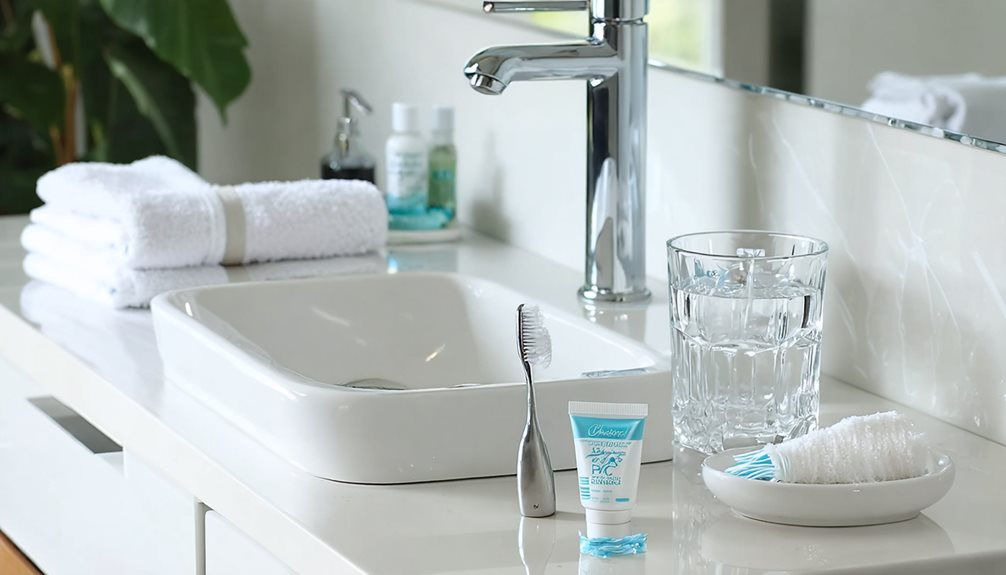
Caring for your dental veneers isn’t just about maintaining a bright smile; it’s about ensuring their longevity and function. By establishing a consistent daily cleaning routine, you can prevent plaque buildup and keep your veneers in top condition. But brushing isn’t the only step. Avoiding certain habits and foods plays a vital role too. Are you aware of the common mistakes that might be undermining your efforts? And when was the last time you had a check-up to assess your veneer’s integrity? There’s more to think about when it comes to protecting your investment.
Daily Cleaning Routine
A consistent daily cleaning routine is vital for maintaining the longevity and aesthetic appeal of your dental veneers. To guarantee veneers remain in peak condition, it’s essential to employ effective flossing techniques and brushing methods. Begin by selecting a soft-bristled toothbrush, as this minimizes abrasion on the veneer surface. Employ a non-abrasive toothpaste to gently clean your teeth twice daily, focusing on a 45-degree angle to effectively reach the gumline, where plaque tends to accumulate.
Flossing is equally important to remove debris and plaque between teeth, which can compromise veneer aesthetics. Utilize a gentle sawing motion with unwaxed floss to avoid snagging between tight contacts. Pay special attention to the interdental spaces, making sure that you glide the floss along the sides of each tooth. This technique helps maintain the integrity of both your veneers and natural teeth.
Incorporate an alcohol-free mouthwash to complete your routine, reducing bacterial load and providing a fresh finish. By consistently applying these precise techniques, you preserve the pristine condition of your veneers, while also contributing to your overall oral health. Remember, meticulous care guarantees your veneers remain both functional and visually appealing.
Avoiding Damaging Habits
Beyond maintaining a meticulous cleaning routine, safeguarding your dental veneers requires awareness of certain habits that can cause damage. One of the most vital factors involves controlling bad habits such as nail biting, chewing on pens, or using your teeth as tools. These actions can exert undue pressure on veneers, leading to chipping or displacement. It’s imperative to recognize these tendencies and consciously replace them with safer alternatives to maintain the integrity of your veneers.
Equally important is the consideration of your food choices. Hard foods like nuts, hard candies, or even ice can pose a risk to the structural stability of veneers. Opting for softer food alternatives or cutting hard items into smaller, manageable pieces can greatly reduce the potential for damage. Additionally, be cautious with foods that are high in acidity, such as citrus fruits, as they can weaken the bonding material over time.
Avoiding staining agents is also essential. Coffee, red wine, and dark berries, known for their staining properties, should be consumed in moderation. Using a straw or rinsing your mouth with water afterward can help minimize discoloration. By making informed choices, you can effectively preserve the longevity and appearance of your dental veneers.
Regular Dental Check-Ups
Regular dental check-ups, a cornerstone of oral health maintenance, play an essential role in preserving your dental veneers. These visits enable your dentist to assess the condition of your veneers, guaranteeing they remain intact and free from potential complications. During check-ups, your dentist will evaluate the fit and adhesion, identifying any early signs of wear or damage. This proactive approach underscores the importance of maintenance, as it helps prevent minor issues from escalating into costly repairs or replacements.
Professional recommendations suggest scheduling check-ups every six months. This frequency allows for timely intervention and guarantees that your veneers, as well as your natural teeth, are monitored closely. Your dentist will also perform a professional cleaning, removing plaque or tartar that could compromise the veneers’ longevity. By maintaining this routine, you can mitigate the risk of gum disease, which can adversely affect the supporting structures of your veneers.
In addition, these appointments are an opportunity for you to discuss any concerns or changes in your oral habits with your dentist. This open communication is vital for optimizing your veneer care strategy. Adhering to regular dental check-ups empowers you to sustain the health and aesthetics of your veneers effectively.
Frequently Asked Questions
Can Dental Veneers Stain Over Time?
Yes, dental veneers can stain over time. Staining factors include food, beverages, and oral habits. To minimize staining, follow maintenance tips: brush regularly, avoid stain-inducing substances, and schedule professional cleanings to maintain ideal veneer appearance.
How Long Do Dental Veneers Typically Last?
You’ll want to know that dental veneers typically last 10-15 years. Veneer longevity factors include the material used and your oral habits. Implementing regular maintenance routines, such as proper brushing and avoiding hard foods, greatly extends their lifespan.
Are There Specific Foods to Avoid With Veneers?
You’re advised to avoid hard foods like nuts and ice, as they can damage veneers. Sticky candies should also be avoided, as they might cause veneers to loosen. Maintaining this diet helps preserve your veneers’ integrity.
How Do Veneers Affect Tooth Sensitivity?
Veneers often reduce tooth sensitivity causes by covering exposed dentin. However, managing sensitivity discomfort involves avoiding extreme temperatures and using desensitizing toothpaste. You’ll experience less discomfort as veneers provide a protective barrier, minimizing direct stimuli contact.
Can Veneers Be Whitened Like Natural Teeth?
You can’t whiten veneers with traditional whitening methods because they don’t respond like natural teeth. To maintain their appearance, focus on veneer maintenance, including regular cleaning and avoiding staining substances to keep them looking bright.

